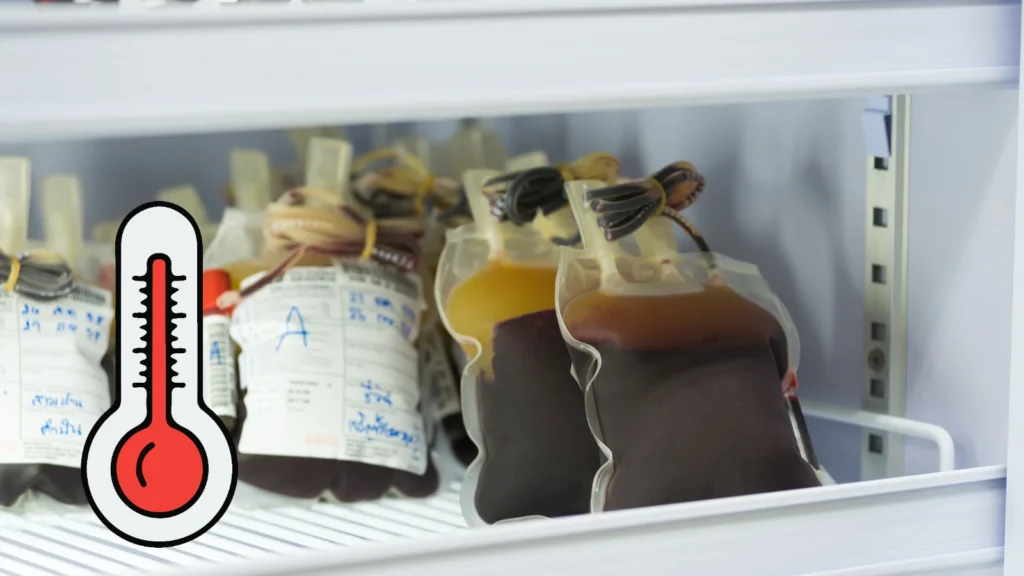
Sometime between the nights of November 1 and 2, 2026, someone with unauthorized access to refrigeration equipment used by the French Blood Establishment (Établissement Français du Sang, or EFS) allegedly reset freezer temperature controls from roughly -30°C to a scorching 110°C. The targets weren’t EFS’s own systems directly, but those of its cooling equipment and maintenance provider, Coolworld — a supplier whose infrastructure reaches into facilities that store donated blood and plasma for patient transfusions.
Caught Before It Became a Crisis
The attack reportedly affected facilities in the Bourgogne-Franche-Comté region, according to reporting from the French outlet Cyberattaque, which cited the satirical weekly Le Canard enchaîné. What likely prevented a far more serious outcome was old-fashioned vigilance: an on-call technician noticed temperatures climbing overnight and was able to intervene before the disruption caused operational harm. France’s Health Ministry has since confirmed that staff detected the abnormal readings in time and that the incident produced no confirmed consequences for patients or blood supplies.
That said, the scope of what was touched appears to have grown as the story developed. Initial reports described the incident as affecting donor samples kept for blood-safety monitoring purposes. EFS later told Le Canard enchaîné that frozen plasma intended for actual patient transfusions was also involved in the affected equipment, though no public reporting has confirmed that any plasma was destroyed or that any transfusion was disrupted as a result.
Setpoint Versus Reality
One technical nuance is worth underlining here: the 110°C figure being reported is a setpoint — the temperature requested through the control system — not necessarily the temperature that was actually reached inside the freezer units or within the stored blood products themselves. Controller setpoints, measured air temperature, and the internal temperature of stored medical products are three distinct readings, and how long any given unit sat outside safe storage limits determines the real-world risk. Fresh frozen plasma is typically required to stay at -25°C or colder, so a sustained temperature swing, if it occurred, could in theory render affected units unusable for transfusion — but the number of units involved, the duration of the exposure, and the actual internal temperatures reached have not been disclosed.
Just as importantly, no public technical investigation has named a specific vulnerability, a compromised account, or an entry point into Coolworld’s systems. Investigators have not confirmed which make or model of industrial controller was manipulated, which means any claim pinning the incident on a specific known flaw would be running ahead of the evidence currently available.
Part of a Wider Pattern
This isn’t an isolated event. It follows closely on the heels of earlier attacks against supermarket refrigeration systems across Europe, where attackers reportedly forced units into continuous defrost cycles. While the behavior looks similar — remote manipulation of industrial refrigeration setpoints — there’s no confirmed evidence tying the same actors, equipment, or access method to both incidents.
What does tie the two together is a broader vulnerability landscape that French authorities had already flagged. On October 12, France’s national cybersecurity agency, CERT-FR, issued an alert confirming widespread compromises affecting Danfoss AK-SM and AK-SC refrigeration controllers, as well as Copeland and Dixell XWEB systems. The agency’s warning was blunt: stop exposing refrigeration management interfaces directly to the public internet. Separate research has also documented a significant number of internet-facing Danfoss systems discoverable through search engines, though the mere existence of an exposed device doesn’t confirm it has been compromised.
What Operators Should Be Doing Now
CERT-FR’s guidance for operators of industrial refrigeration systems includes several concrete steps:
- Remove any direct public internet exposure of refrigeration controller management interfaces
- Audit full device configurations and defrost schedules for unauthorized changes
- Restrict remote access to secure VPNs or otherwise protected internal networks
- Apply available firmware updates on supported controller models
- Change default administrative passwords and enable all applicable security settings
For hospitals, blood banks, and the broader healthcare supply chain, this incident is a pointed reminder that cybersecurity risk doesn’t stop at patient records and electronic health systems. A single compromised vendor — in this case, a refrigeration and cooling contractor several steps removed from direct patient care — can put physical medical supplies at risk in ways that have nothing to do with stolen data. Independent temperature monitoring, redundant alerting, and a human on call who actually notices when something looks wrong proved to be the difference between a contained incident and a public health emergency here. No evidence has emerged of donor data being stolen in connection with this event, but as more medical cold-chain equipment gets connected to the internet for remote monitoring, incidents like this one are likely to keep surfacing until operators close off unnecessary exposure.
Leave a Reply
You must be logged in to post a comment.