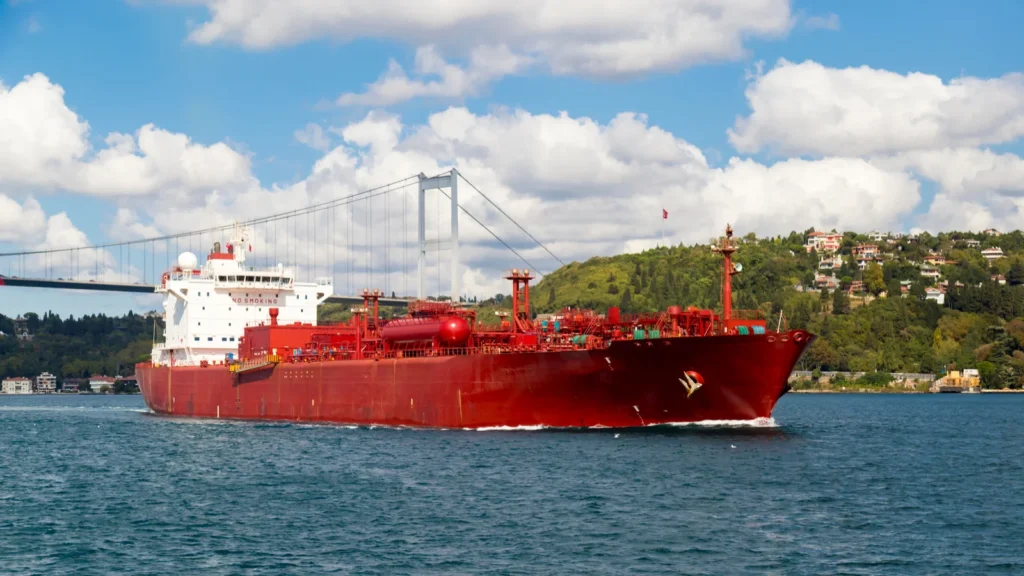
U.S. authorities are investigating whether Iran was behind a string of cyberattacks that may have compromised the systems of as many as 50 commercial vessels, according to a U.S. official familiar with the inquiry. The official said the attackers exploited known vulnerabilities in Fortinet FortiGate devices installed aboard the ships.
What’s Known So Far
The figure of 50 affected ships is a U.S. intelligence estimate rather than a confirmed count, and no public attribution to Iran or any other actor has been made. Reporting on the investigation indicates the targeted vessels were carrying oil, liquefied petroleum gas, chemicals, and other hazardous cargo, with at least one affected ship identified as a liquefied natural gas tanker. The reporting does not establish that every vessel suffered the same degree of access or disruption — the scope appears to vary case by case.
FortiGate devices function as firewalls and also provide VPN access for remote connections, a combination that makes them a high-value target: compromising one device can open a path both into the network and around its perimeter defenses. The FBI and U.S. Coast Guard warned back in September that attackers were actively exploiting FortiGate vulnerabilities specifically within the maritime sector, and were routinely scanning for devices that had not been patched.
It is not yet clear which specific FortiGate vulnerabilities were used in each case. Separate reporting has previously documented FortiGate exploitation against ordinary enterprise networks unrelated to the maritime incidents, underscoring how widely these flaws have been targeted across sectors.
From IT Networks Into Ship Control Systems
According to the U.S. official, attackers who gained a foothold moved from the vessels’ onboard IT networks into operational technology (OT) systems — the equipment that monitors and controls physical shipboard functions. Crew members on affected ships reportedly noticed symptoms consistent with a wider problem, including email outages and login failures, and at least one vessel experienced an extended communications blackout.
The official said the access gained by the attackers could potentially have reached systems tied to propulsion, steering, navigation, or cargo management — but did not cite any instance of an attacker actually altering those functions. That distinction is an important one: reaching a network segment connected to ship control systems is not the same as demonstrating control over them. It does, however, explain why something as mundane as an email outage prompted a far broader investigation once investigators realized the business and operational networks were connected.
In August, the FBI and Coast Guard dispatched a specialist team aboard two foreign commercial vessels bound for U.S. ports to help address the threat directly. The agencies reported no current signs of operational disruption, vessel instability, physical danger to crew, or environmental harm resulting from the intrusions.
A Familiar Playbook, an Unconfirmed Actor
Suspicion has fallen on Iran in part because of precedent: a 2021 CISA advisory documented Iranian government-linked hackers exploiting Fortinet vulnerabilities against critical infrastructure targets, and separate reporting has tied Iranian-affiliated actors to campaigns against industrial control systems used by U.S. utilities. Neither prior case proves who is behind the maritime intrusions, however — a known, unpatched firewall flaw can be exploited by any number of unrelated groups, so the method alone doesn’t establish attribution.
What Ship Operators Should Do Now
Maritime security advisories tied to this campaign recommend operators act regardless of how the attribution question is eventually resolved:
- Patch FortiGate devices to the latest firmware without delay
- Review firewall and VPN logs for signs of unauthorized access
- Verify that business IT networks are properly segmented from OT systems that control shipboard equipment
- Reset credentials that may have been exposed during the incident window
- Require multi-factor authentication for all remote access to onboard networks
Patching closes the entry point attackers are believed to have used. Reviewing logs and access configurations is what actually determines whether an intruder got in before that door was shut — a step operators shouldn’t skip even after applying the fix.
Leave a Reply
You must be logged in to post a comment.