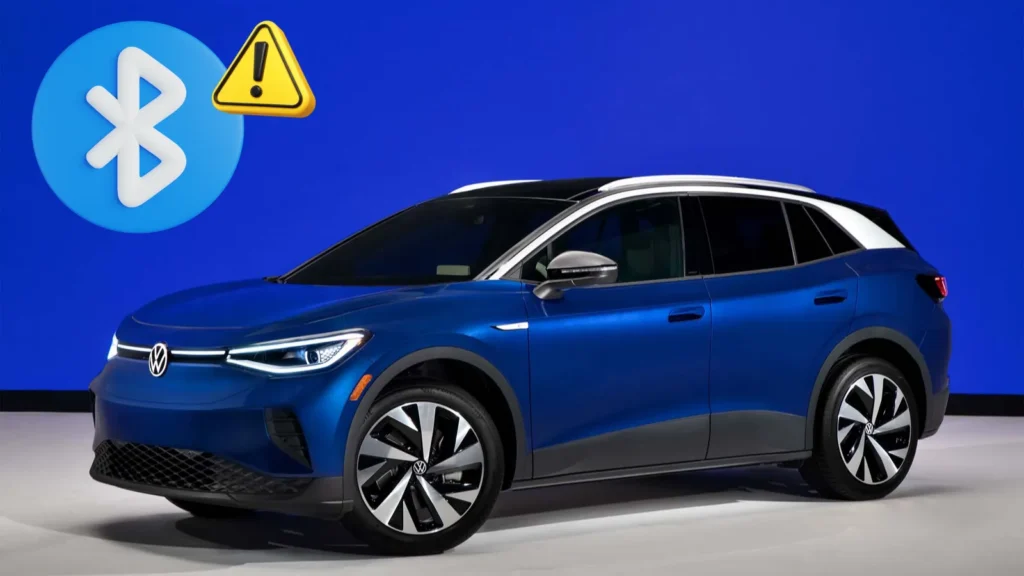
A year and a half after a Bluetooth flaw chain known as PerfektBlue became public, researchers in Budapest have shown that plenty of Volkswagen vehicles are still exposed to it. Hungarian security firm PCA Cyber Security paired a laptop with a Volkswagen ID.4’s infotainment system and, from there, listened in on the cabin microphone, pulled GPS coordinates, and toggled the heater, windshield wipers, and sunroof.
A patch rollout that has dragged on for 16 months
The underlying bug lives in BlueSDK, a Bluetooth stack built by OpenSynergy that several carmakers license for their infotainment units. When PerfektBlue first surfaced, it was flagged as a problem across multiple vehicle brands, not just Volkswagen. What the new Budapest demonstration adds is confirmation that, well over a year later, some cars on the road still haven’t received a fix.
Volkswagen told the German outlet heise that older infotainment software needed more extensive rework and testing before a patch could ship safely, which is why the rollout stretched out as long as it did. The automaker says it moved faster on newer software branches. Owners running anything older than version 4.0 can grab version 3.9.1 over the air, either via cellular or Wi-Fi, while the car is parked. Other affected branches need a trip to the shop. Anything already on version 5.6 or newer was never exposed in the first place. No recall has been issued.
What an attacker actually needs to pull this off
This isn’t a drive-by compromise. The driver has to approve a Bluetooth pairing request before any of this works — reject an unfamiliar pairing prompt and the attack has nowhere to go. Once a connection is accepted, though, the PerfektBlue chain lets an attacker run their own code on the infotainment unit and reach whatever cabin functions it controls.
That caveat matters for scale, too. PCA’s researchers estimate several hundred thousand Volkswagen vehicles could theoretically be running vulnerable software, but that’s a ceiling on exposure, not a count of cars that have actually been touched by an attacker. Nothing in the report points to criminal exploitation in the wild — this is a controlled proof-of-concept against a single test vehicle.
Infotainment, not the controls that actually drive the car
Volkswagen is explicit that the flaw doesn’t reach steering, braking, or acceleration — the attack surface is limited to infotainment and the connected convenience features wired into it. That’s a real limit on severity, but it doesn’t make the exposure trivial. A stranger with the right tooling and a brief window near your parked car could, in theory, listen to conversations inside it or build a picture of where you go and when, just by riding along on the infotainment system’s Bluetooth stack.
This is also a separate issue from other Volkswagen and Skoda security findings that have surfaced over the past year involving vehicle data systems. Those reports shouldn’t be read as part of the same vulnerability chain — PerfektBlue is specifically about the Bluetooth software layer.
What owners should actually do
- Decline any Bluetooth pairing request you didn’t initiate yourself, and don’t plug in USB devices you don’t recognize.
- Check your infotainment software version through the vehicle’s settings menu or with your dealer.
- If you’re on an older branch, install the over-the-air update where it’s offered, or book a service visit if the fix requires one.
- When in doubt about whether your specific model and software version are covered, ask a Volkswagen dealer directly rather than assuming every vehicle gets the same patch path.
The bigger lesson sits a level above any one car brand. As infotainment systems absorb more of a vehicle’s wireless connectivity, the patch cycle for that software increasingly determines how exposed the car is — and, as this case shows, that cycle can run a lot slower than the one buyers are used to for their phones.
Leave a Reply
You must be logged in to post a comment.