A Sabotaged Setting and a Taunting Message
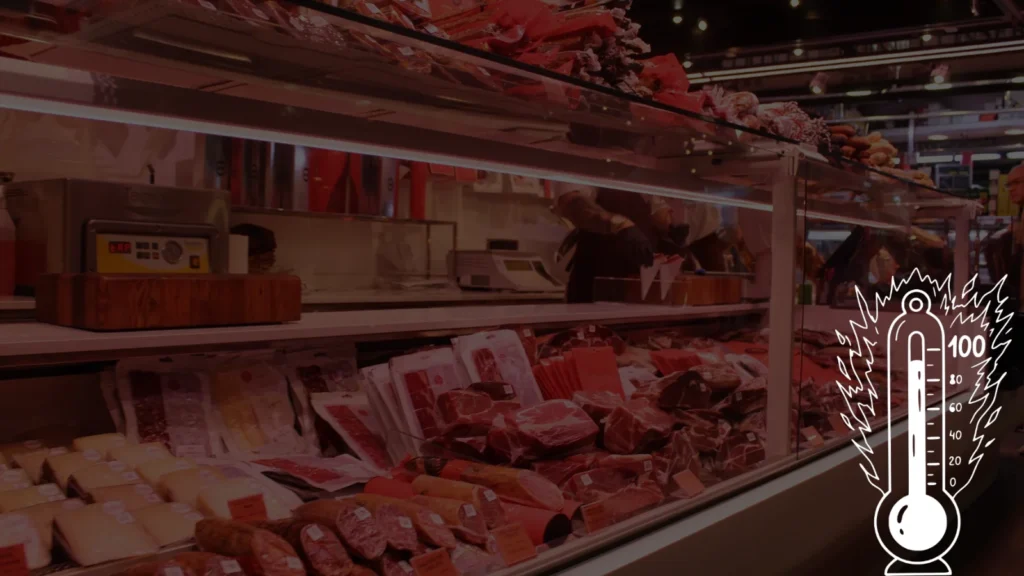
At a meat processing plant run by the Tolmin Agricultural Cooperative in Slovenia, attackers remotely reached into the facility’s cooling control system and reset a freezer chamber’s target temperature to 100°C. When a service technician tried to log in to the control system to investigate, he found his access blocked. In place of the usual controls, his screen displayed a photo of Italian government minister Matteo Salvini with a caption translating roughly to “Thank Uncle Matteo,” according to cooperative director Nikola Šavle, who spoke to Slovenian outlet 24ur.
The freezer itself never actually reached 100°C — that figure was only the tampered setpoint in the digital control system, not a temperature the chamber’s contents were exposed to. Staff caught the altered setting before it caused physical harm to the stored product, and Šavle said no meat went to waste as a result. Still, the cooperative estimated that roughly €250,000 worth of goods at the Salamerija Alpija facility in Tolmin had been placed at risk — a figure representing exposed inventory value, not a confirmed loss.
How the Intrusion Was Caught
An employee first noticed the altered 100°C setting around midday during a routine check at the salami production line. Staff were already on alert because of a wave of recent attacks against supermarket refrigeration systems elsewhere in Europe, so they moved quickly to check cooling equipment across the cooperative’s other sites. That search turned up two more problems: an issue at the cooperative’s slaughterhouse, and a store refrigerator that had been reset from its normal 2–3°C range up to 20°C.
The cooperative manages temperature across its cold rooms and storage chambers through a single internet-connected system — a convenience that, in this case, also gave attackers a centralized target. Once the intrusion was discovered, staff disconnected the cooling equipment from the network entirely and switched to manual temperature control. The technician’s blocked login meant the team couldn’t simply log back in and reverse the malicious change through the normal interface; it had to be worked around physically instead.
Why the Alarm Didn’t Fire
Perhaps the most striking detail is what the facility’s own safety systems failed to catch. The cooperative’s alarm system was designed to flag an unexpected drop in temperature inside a chamber — a sensible safeguard against equipment failure. But in this case, what changed was the target the equipment was told to follow, not yet the measured temperature in the room, and the alarm had no way to flag that kind of tampering. Staff received no automated warning at all; a routine human walk-through is what caught the problem.
Šavle pointedly raised the question of what might have happened had the tampering occurred over a weekend, when the production sites are typically unstaffed and no one would be walking the floor to notice a suspicious number on a control panel.
Part of a Wider Pattern
The Tolmin incident shares a visible signature with a string of recent attacks on supermarket refrigeration systems across Europe — unauthorized changes to cooling setpoints — though nothing in the public reporting establishes that the same actors or methods were involved. The Salvini image displayed to the locked-out technician likewise doesn’t reveal who was behind the attack or what motivated the specific target.
The timing is notable for another reason: the U.S. Cybersecurity and Infrastructure Security Agency (CISA) published a security advisory on November 24 covering vulnerabilities in Danfoss commercial refrigeration controllers — just days before the Tolmin attack came to light. The cooperative’s public statements haven’t identified the make or model of its own control system, and there is no public evidence directly linking the Danfoss advisory to this specific incident.
Lessons for Operational Technology Security
Refrigeration controllers fall under operational technology (OT) — the physical equipment and software that monitor or control real-world processes, as distinct from conventional IT systems. CISA’s general guidance for OT operators points toward a consistent set of practices that apply directly here:
- Maintain a clear inventory of which controller manages each room, who has permission to change its settings, and how outside service providers connect remotely
- Remove direct internet access to control equipment wherever possible, and separate OT networks from general business IT networks
- Use strong authentication for any remote access that is operationally necessary
- Practice manual operation regularly, so staff can keep equipment running safely if remote access is lost or compromised
CISA also recommends layering in independent sensors that monitor actual conditions regardless of what a compromised controller reports, plus a separate alert specifically for unauthorized changes to a setpoint — catching the tampering itself, not just its eventual physical consequences. Both types of alert need to reach someone capable of acting outside normal business hours. In Tolmin, it took a routine walk-through to catch what the automated system missed; the real test for any cold-storage operator is whether the same kind of tampering would wake someone up on a quiet Sunday night, and whether they could restore safe settings without relying on the very remote-access system an attacker had just compromised.
Leave a Reply
You must be logged in to post a comment.